InteLex Past Masters is a collection of full-text web-based scholarly editions of classic works in the humanities. InteLex Corporation was founded in 1989 by its current chief executive officer, Mark Rooks, to produce electronic versions of the works of the great philosophers, based on existing scholarly editions. The company is located in Charlottesville, Virginia. Its databases are marketed to academic institutions, with pricing based on the individual collections purchased. Content is provided in XML and searchable image format and is accessed through the InteLex Corporation website. In addition to philosophy, subject coverage includes religious studies, English literature, women's writing, social science, and history of science. InteLex databases are found in institutions in over 65 countries around the world.
Sub-pixel resolution
In digital image processing, sub-pixel resolution can be obtained in images constructed from sources with information exceeding the nominal pixel resolution of said images. == Example == For example, if the image of a ship of length 50 metres (160 ft), viewed side-on, is 500 pixels long, the nominal resolution (pixel size) on the side of the ship facing the camera is 0.1 metres (3.9 in). Now sub-pixel resolution of well resolved features can measure ship movements which are an order of magnitude (10×) smaller. Movement is specifically mentioned here because measuring absolute positions requires an accurate lens model and known reference points within the image to achieve sub-pixel position accuracy. Small movements can however be measured (down to 1 cm) with simple calibration procedures. Specific fit functions often suffer specific bias with respect to image pixel boundaries. Users should therefore take care to avoid these "pixel locking" (or "peak locking") effects. == Determining feasibility == Whether features in a digital image are sharp enough to achieve sub-pixel resolution can be quantified by measuring the point spread function (PSF) of an isolated point in the image. If the image does not contain isolated points, similar methods can be applied to edges in the image. It is also important when attempting sub-pixel resolution to keep image noise to a minimum. This, in the case of a stationary scene, can be measured from a time series of images. Appropriate pixel averaging, through both time (for stationary images) and space (for uniform regions of the image) is often used to prepare the image for sub-pixel resolution measurements.
Mark I Perceptron
The Mark I Perceptron was a pioneering supervised image classification learning system developed by Frank Rosenblatt in 1958. It was the first implementation of an artificial intelligence (AI) machine. It differs from the Perceptron which is a software architecture proposed in 1943 by Warren McCulloch and Walter Pitts, which was also employed in Mark I, and enhancements of which have continued to be an integral part of cutting edge AI technologies like the Transformer. == Architecture == The Mark I Perceptron was organized into three layers: A set of sensory units which receive optical input A set of association units, each of which fire based on input from multiple sensory units A set of response units, which fire based on input from multiple association units The connection between sensory units and association units were random. The working of association units was very similar to the response units. Different versions of the Mark I used different numbers of units in each of the layers. == Capabilities == In his 1957 proposal for funding for development of the "Cornell Photoperceptron", Rosenblatt claimed:"Devices of this sort are expected ultimately to be capable of concept formation, language translation, collation of military intelligence, and the solution of problems through inductive logic."With the first version of the Mark I Perceptron as early as 1958, Rosenblatt demonstrated a simple binary classification experiment, namely distinguishing between sheets of paper marked on the right versus those marked on the left side. One of the later experiments distinguished a square from a circle printed on paper. The shapes were perfect and their sizes fixed; the only variation was in their position and orientation. The Mark I Perceptron achieved 99.8% accuracy on a test dataset with 500 neurons in a single layer. The size of the training dataset was 10,000 example images. It took 3 seconds for the training pipeline to go through a single image. Higher accuracy was observed with thick outline figures compared to solid figures, likely because outline figures reduced overfitting. Another experiment distinguished between a square and a diamond for which 100% accuracy was achieved with only 60 training images, with a Perceptron having 1,000 neurons in a single layer. The time taken to process each training input for this larger perceptron was 15 seconds. The only variation was in position of the image, since rotation would have been ambiguous. In that same experiment, it could distinguish between the letters X and E with 100% accuracy when trained with only 20 images (10 images of each letter). Variations in the images included both position and rotation by up to 30 degrees. When variation in rotation was increased to any angle (both in training and test datasets), the accuracy reduced to 90% with 60 training images (30 images of each letter). For distinguishing between the letters E and F, a more challenging problem due to their similarity, the same 1,000 neuron perceptron achieved an accuracy of more than 80% with 60 training images. Variation was only in the position of the image, with no rotation.
DARPA Prize Competitions
Over the years, the U.S. Defense Advanced Research Projects Agency (DARPA) has conducted numerous prize competitions to spur innovation. A prize competition allows DARPA to establish an ambitious goal, opening the door to novel approaches from the public that might otherwise appear too risky for experts in a particular field to pursue. == Statutory authorities == In 1999, Congress provided prize competition authority to DARPA in the National Defense Authorization Act for Fiscal Year 2000 (P.L. 106–65), 10 U.S.C. § 4025, formerly 10 U.S.C. §2374a. DARPA also conducts prize competitions under the America COMPETES Act, 15 U.S.C. § 3719. == Recent prize competitions == DARPA Grand Challenge (2004 and 2005) was a prize competition to spur the development of autonomous vehicle technologies. The $1 million prize went unclaimed as no vehicles could complete the challenging desert route from Barstow, CA, to Primm, NV, on March 13, 2004. A year later, on October 8, 2005, the Stanford Racing Team won the $2 million prize during the second competition of the Grand Challenge in the desert Southwest near the California/Nevada state line. DARPA Urban Challenge (2007) required the competitors to build an autonomous vehicle capable of driving in traffic and performing complex maneuvers such as merging, passing, parking, and negotiating intersections. On November 3, 2007, the Carnegie Mellon Team won the $2 million prize, and its vehicle became the first autonomous vehicle that interacted with both manned and unmanned vehicle traffic in an urban environment. DARPA Network Challenge (Red Balloon Challenge) (2009) explored the roles that the Internet and social networking play in solving broad-scope, time-critical problems. On December 5, 2009, the Massachusetts Institute of Technology team won $40,000 by locating the ten moored, eight-foot, red weather balloons at ten places in the United States within seven hours. DARPA Digital Manufacturing Analysis, Correlation and Estimation Challenge (DMACE) (2010) was a three-month contest to showcase the potential of digital manufacturing of advanced materials. The University of California at Santa Barbara team won a $50,000 prize for crushing 180 digitally manufactured (DM) titanium mesh spheres with the most accurate predictive model of the components’ properties. DARPA Shredder Challenge (2011) was to identify and assess potential capabilities and vulnerabilities to sensitive information in the national security community. Participating teams must download the images of the documents shredded into more than 10,000 pieces from the Challenge website, reconstruct the documents, and solve the five puzzles. Of almost 9,000 teams, the San Francisco-based All Your Shreds Are Belong to U.S team won the $50,000 prize. DARPA UAVForge Challenge (2011-2012) aimed to build and test a user-intuitive, backpack-portable unmanned aerial vehicle (UAV) that could quietly fly in and out of critical environments to conduct sustained surveillance for up to three hours. The $100,000 prize was not claimed because none of the 140 teams met the technical matrix. DARPA Cash for Locating & Identifying Quick Response Codes (CLIQR) Quest Challenge (2012) explored the role the Internet and social media played in the timely communication, wide-area team-building, and urgent mobilization required to solve broad scope, time-critical problems. The challenge offered $40,000 to the first individual or team that could locate seven posters appearing in U.S. cities bearing the DARPA logo and a quick response code (QR) within 15 days. No team found and submitted all seven codes. DARPA Fast Adaptable Next-Generation Ground Vehicle (FANG) Challenge (2012-2013) was to use three competitions for the design of an infantry fighting vehicle, culminating in prototypes. In April 2013, DARPA awarded US$1 million to a three-man team during the first competition. DARPA decided not to proceed with the second and third competitions as originally planned and transitioned the technologies to the defense and commercial industry through the Digital Manufacturing and Design Innovation Institute (DMDII). DARPA Spectrum Challenge (2013-2014) sought to demonstrate how a software-defined radio can use a given communication channel in the presence of other users and interfering signals. Three teams emerged as the overall winners, winning a total of $150,000 in prizes. DARPA Chikungunya (CHIKV) Challenge (2014-2015) was a health-related effort to develop the most accurate predictions of CHIKV cases for all Western Hemisphere countries and territories between September 2014 and March 2015. On May 12, 2015, DARPA awarded $500,000 in prizes to the 11 winners of the competition during a scientific review DARPA Robotics Challenge (DRC) (2013-2015) aimed to develop semi-autonomous ground robots that could do "complex tasks in dangerous, degraded, human-engineered environments." A South Korean team won the first prize of $2 million, and two U.S. teams won $1 million and $500,000 as second and third winners. DARPA Cyber Grand Challenge (CGC) (2014 - 2016) was to “create automatic defensive systems capable of reasoning about flaws, formulating patches and deploying them on a network in real time.” The top three winners were awarded prizes of $2 million, $1 million, and $750,000, respectively. DARPA Spectrum Collaboration Challenge (SC2) (2016-2019) aimed to encourage the development of AI-enabled wireless networks to “ensure that the exponentially growing number of military and civilian wireless devices would have full access to the increasingly crowded electromagnetic spectrum.” A team from the University of Florida won the overall top prize of US$2 million at the final SC2 competition. DARPA Subterranean (SubT) Challenge (2017-2021) was to develop robotic technologies to map, navigate, search and exploit complex underground environments. The first-place winners of the system final competition and of the virtual final competition were awarded $2 million and $750,000, respectively, with multiple prizes awarded to the second and third-place winners. DARPA Launch Challenge (2018-2020) was a $12 million satellite launch challenge to demonstrate responsive and flexible space launch capabilities from the small launch providers and was to culminate in two separate launch competitions where the competitors must launch a satellite to low Earth orbit (LEO) within days of each other at different locations in the United States. The competition ended without a winner. DARPA Forecasting Floats in Turbulence (FFT) Challenge (2021) was to spur technologies that could predict the location of sea drifters or floats within 10 days. DARPA awarded $25,000 for first place, with prizes of $15,000 and $10,000 for second place and third place. DARPA Artificial Intelligence Cyber Challenge (AIxCC) (2023–2025) was a two-year challenge and asks competitors to design novel AI systems to secure critical software code on which Americans rely. The total prize money is $29.5 million. In March 2024, the Advanced Research Projects Agency for Health (ARPA-H) partnered with DARPA, contributing an additional $20 million to the competition's prize pool to address software vulnerabilities in medical devices, hospital IT, and biotech equipment. AIxCC collaborates with Google, Microsoft, OpenAI, Anthropic, Linux Foundation, Open Source Security Foundation, Black Hat USA, and DEF CON, all of which provide AIxCC with access to large language models. In August 2024, AIxCC held the semifinal at DEF CON in Las Vegas. DARPA and ARPA-H tested all 42 submissions by running them through various open-source coding projects with deliberately injected vulnerabilities and scored the tools based on their effectiveness in identifying and fixing security flaws. Seven teams, each winning $2 million in the semifinals, competed in the final round of the AIxCC at the August 2025 DEF CON conference. Team Atlanta won first place with a $4 million prize for its cyber reasoning systems, which identified and patched vulnerabilities across 54 million lines of code. DARPA Triage Challenge (2023 – 2026) aims to spur the development of novel physiological features for medical triage, with a total prize money of $7 million. In October 2024, Challenge Event 1 was held in Perry, Georgia, featuring to-scale replicas of disaster sites such as an airplane crash and Hurricane Katrina, and teams competed based on how closely their data aligned with the agency’s official data and how quickly and accurately their autonomous systems could identify individuals most urgently in need of medical care. DARPA concluded the second year of competitions and, in November 2025, named the top performers in systems and data categories, which will advance to the final 2026 competition. The DARPA Lift Challenge (2025-2026) is for participants to design unmanned aerial systems capable of carrying up to four times their own weight, with a minimum payload of 110 pounds. Acco
With Folded Hands ...
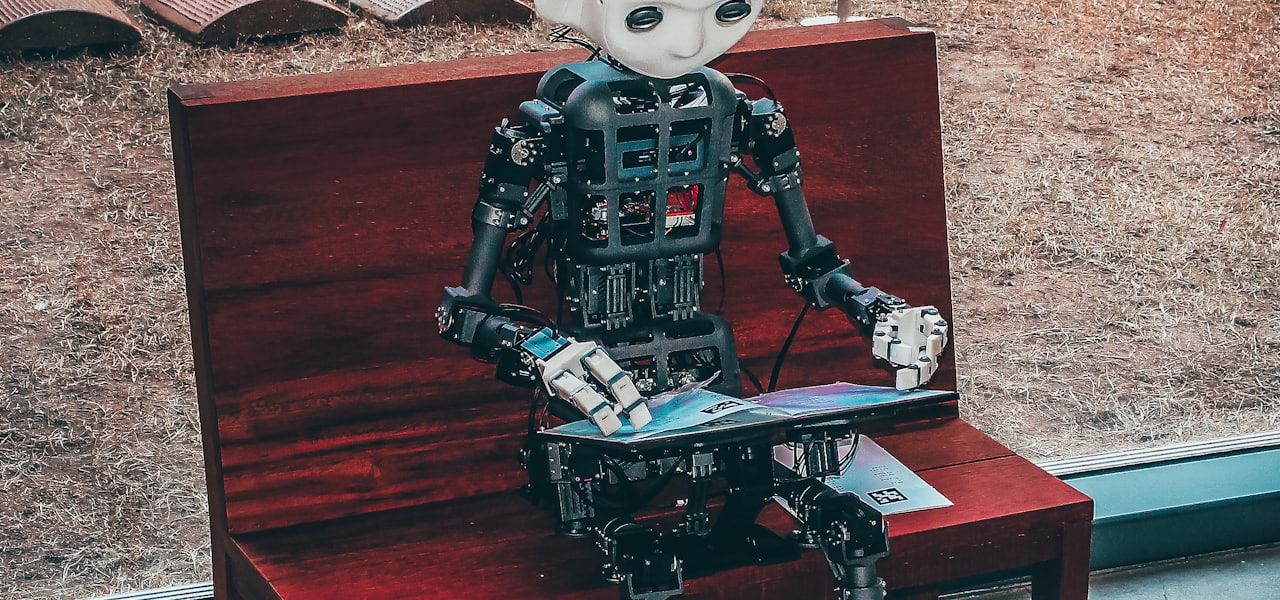
"With Folded Hands ..." is a 1947 science fiction novelette by American writer Jack Williamson (1908–2006). In writing it, Williamson was influenced by the aftermath of World War II, the atomic bombings of Hiroshima and Nagasaki, and his concern that "some of the technological creations we had developed with the best intentions might have disastrous consequences in the long run." The novelette first appeared in the July 1947 issue of Astounding Science Fiction and was later included in The Science Fiction Hall of Fame, Volume Two (1973) after being voted one of the best novellas up to 1965. In 1950, it was the first of several Astounding stories adapted for NBC's radio series Dimension X. == Rewrite and sequel == The 1947 publication was followed by a novel-length rewrite, with a different setting and inventor. At the behest of Astounding editor-in-chief John W. Campbell, a new ending had the robots defeated by means of what Williamson and Campbell would later christen "psionics". This novel was serialized, also in Astounding (March, April, May 1948), as ... And Searching Mind, and finally published in hardback book form as The Humanoids (1949). Much later, in 1980, Williamson followed with another sequel, The Humanoid Touch. == Plot summary == Underhill, a seller of "Mechanicals" (unthinking robots that perform menial tasks) in the small town of Two Rivers, is startled to find a competitor's store on his way home. The competitors are not humans but are small black robots who appear more advanced than anything Underhill has encountered before. They describe themselves as "humanoids". Disturbed at his encounter, Underhill rushes home to discover that his wife has taken in a new lodger, a mysterious old man named Sledge. In the course of the next day, the new Mechanicals have appeared everywhere in town. They state that they only follow the Prime Directive: "to serve and obey and guard men from harm". Offering their services free of charge, they replace humans as police officers, bank tellers, and more, and eventually drive Underhill out of business. Despite the humanoids' benign appearance and mission, Underhill soon realizes that, in the name of their Prime Directive, the mechanicals have essentially taken over every aspect of human life. No humans may engage in any behavior that might endanger them, and every human action is carefully scrutinized. Suicide is prohibited. Humans who resist the Prime Directive are taken away and lobotomized, so that they may live happily under the direction of the humanoids. Underhill learns that his lodger Sledge is the creator of the humanoids and is on the run from them. Sledge explains that 60 years earlier he had discovered the force of "rhodomagnetics" on the planet Wing IV and that his discovery resulted in a war that destroyed his planet. In his grief, Sledge designed the humanoids to help humanity and be invulnerable to human exploitation. However, he eventually realized that they had instead taken control of humanity, in the name of their Prime Directive, to make humans happy. The humanoids are spreading out from Wing IV to every human-occupied planet to implement their Prime Directive. Sledge and Underhill attempt to stop the humanoids by aiming a rhodomagnetic beam at Wing IV, but fail. The humanoids take Sledge away for surgery. He returns with no memory of his prior life, stating that he is now happy under the humanoids' care. Underhill is driven home by the humanoids, sitting "with folded hands," as there is nothing left to do. == Origins == In a 1991 interview, Williamson revealed how the story construction reflected events of his childhood in addition to technological extrapolations: I wrote "With Folded Hands" immediately after World War II, when the shadow of the atomic bomb had just fallen over SF and was just beginning to haunt the imaginations of people in the US. The story grows out of that general feeling that some of the technological creations we had developed with the best intentions might have disastrous consequences in the long run (that idea, of course, still seems relevant today). The notion I was consciously working on specifically came out of a fragment of a story I had worked on for a while about an astronaut in space who is accompanied by a robot obviously superior to him physically—i.e., the robot wasn't hurt by gravity, extremes of temperature, radiation, or whatever. Just looking at the fragment gave me the sense of how inferior humanity is in many ways to mechanical creations. That basic recognition was the essence of the story, and as I wrote it up in my notes the theme was that the perfect machine would prove to be perfectly destructive... It was only when I looked back at the story much later on that I was able to realize that the emotional reach of the story undoubtedly derived from my own early childhood, when people were attempting to protect me from all those hazardous things a kid is going to encounter in the isolated frontier setting I grew up in. As a result, I felt frustrated and over protected by people whom I couldn't hate because I loved them. A sort of psychological trap. Specifically, the first three years of my life were spent on a ranch at the top of the Sierra Madre Mountains on the headwaters of the Yaqui River in Sonora, Mexico. ... [My mother] was terrified by this environment. My father built a crib that became a psychological prison for me, particularly because my mother apparently kept me in it too long, when I needed to get out and crawl on the floor. ... In retrospect, I'm certain I projected my fears and suspicions of this kind of conditioning, and these projections became the governing emotional principle of "With Folded Hands" and The Humanoids. == Reception == In 2024, Robert Silverberg wrote an essay in which he asserted that "With Folded Hands..." is "probably the best story ever written about robots" and suggested that Elon Musk's Optimus Generation 2 is the realization of the "humanoids" along with their worst drawbacks.
Clone tool
The clone tool, as it is known in Adobe Photoshop, Inkscape, GIMP, and Corel PhotoPaint, is used in digital image editing to replace information for one part of a picture with information from another part. In other image editing software, its equivalent is sometimes called a rubber stamp tool or a clone brush. == Applications == The clone tool can remove objects by copying a nearby background. The user selects a matching location as the source, then paints over the element to be hidden. A typical use for the tool is in object removal – more colloquially, "airbrushing" or "photoshopping" out an unwanted part of the image. If a part of an image is removed simply by cutting it out, then a hole is left in the background. The Clone tool can fill in this hole convincingly with a copy of the existing background from elsewhere in the image. A common use for this tool is to retouch skin, particularly in portraits, to remove blemishes and make skin tones more even. Cloning can also be used to remove other unwanted elements, such as telephone wires, an unwanted bird in the sky, and the like. A more automated method of object removal uses texture synthesis to fill in gaps. Of these, patch-based texture synthesis or "image quilting" is essentially an automated application of the clone tool, choosing the optimal source area so as to patch over with a minimal seam. In some cases, the undesired object is mixed with the remainder of the image, and a simple circular brush, even with feathering, would not work. For these cases, some programs allow an object to be selected by color/outline so other areas are not affected. Other programs allow edge/color sensitive brushes to deal with such objects. == Healing tool == A similar tool is the healing tool, which occurs in variants such as the healing brush or spot healing tool. These incorporate the existing texture, rather than painting it over.
AI-assisted targeting in the Gaza Strip
As part of the Gaza war, the Israel Defense Forces (IDF) have used artificial intelligence to rapidly and automatically perform much of the process of determining what to bomb. Israel has greatly expanded the bombing of the Gaza Strip, which in previous wars had been limited by the Israeli Air Force running out of targets. These tools include the Gospel, an AI which automatically reviews surveillance data looking for buildings, equipment and people thought to belong to the enemy, and upon finding them, recommends bombing targets to a human analyst who may then decide whether to pass it along to the field. Another is Lavender, an "AI-powered database" which lists tens of thousands of Palestinian men linked by AI to Hamas or Palestinian Islamic Jihad, and which is also used for target recommendation. Critics have argued the use of these AI tools puts civilians at risk, blurs accountability, and results in militarily disproportionate violence in violation of international humanitarian law. == The Gospel == Israel uses an AI system dubbed "Habsora", "the Gospel", to determine which targets the Israeli Air Force would bomb. It automatically provides a targeting recommendation to a human analyst, who decides whether to pass it along to soldiers in the field. The recommendations can be anything from individual fighters, rocket launchers, Hamas command posts, to private homes of suspected Hamas or Islamic Jihad members. AI can process military intelligence far faster than humans. Retired Lt Gen. Aviv Kohavi, head of the IDF until 2023, stated that the system could produce 100 bombing targets in Gaza a day, with real-time recommendations which ones to attack, where human analysts might produce 50 a year. A lecturer interviewed by NPR estimated these figures as 50–100 targets in 300 days for 20 intelligence officers, and 200 targets within 10–12 days for the Gospel. === Technological background === The Gospel uses machine learning, where an AI is tasked with identifying commonalities in vast amounts of data (e.g. scans of cancerous tissue, photos of a facial expression, surveillance of Hamas members identified by human analysts), then looking for those commonalities in new material. What information the Gospel uses is not known, but it is thought to combine surveillance data from diverse sources in enormous amounts. Recommendations are based on pattern-matching. A person with enough similarities to other people labeled as enemy combatants may be labelled a combatant themselves. Regarding the suitability of AIs for the task, NPR cited Heidy Khlaaf, engineering director of AI Assurance at the technology security firm Trail of Bits, as saying "AI algorithms are notoriously flawed with high error rates observed across applications that require precision, accuracy, and safety." Bianca Baggiarini, lecturer at the Australian National University's Strategic and Defence Studies Centre wrote AIs are "more effective in predictable environments where concepts are objective, reasonably stable, and internally consistent." She contrasted this with telling the difference between a combatant and non-combatant, which even humans frequently can't do. Khlaaf went on to point out that such a system's decisions depend entirely on the data it's trained on, and are not based on reasoning, factual evidence or causation, but solely on statistical probability. === Operation === The IAF ran out of targets to strike in the 2014 war and 2021 crisis. In an interview on France 24, investigative journalist Yuval Abraham of +972 Magazine stated that to maintain military pressure, and due to political pressure to continue the war, the military would bomb the same places twice. Since then, the integration of AI tools has significantly sped up the selection of targets. In early November, the IDF stated more than 12,000 targets in Gaza had been identified by the target administration division that uses the Gospel. NPR wrote on December 14 that it was unclear how many targets from the Gospel had been acted upon, but that the Israeli military said it was currently striking as many as 250 targets a day. The bombing, too, has intensified to what the December 14 article called an astonishing pace: the Israeli military stated at the time it had struck more than 22,000 targets inside Gaza, at a daily rate more than double that of the 2021 conflict, more than 3,500 of them since the collapse of the truce on December 1. Early in the offensive the head of the Air Force stated his forces only struck military targets, but added: "We are not being surgical." Once a recommendation is accepted, another AI, Fire Factory, cuts assembling the attack down from hours to minutes by calculating munition loads, prioritizing and assigning targets to aircraft and drones, and proposing a schedule, according to a pre-war Bloomberg article that described such AI tools as tailored for a military confrontation and proxy war with Iran. One change that The Guardian noted is that since senior Hamas leaders disappear into tunnels at the start of an offensive, systems such as the Gospel have allowed the IDF to locate and attack a much larger pool of more junior Hamas operatives. It cited an official who worked on targeting decisions in previous Gaza operations as saying that while the homes of junior Hamas members had previously not been targeted for bombing, the official believes the houses of suspected Hamas operatives were now targeted regardless of rank. In the France 24 interview, Abraham, of +972 Magazine, characterized this as enabling the systematization of dropping a 2000 lb bomb into a home to kill one person and everybody around them, something that had previously been done to a very small group of senior Hamas leaders. NPR cited a report by +972 Magazine and its sister publication Local Call as asserting the system is being used to manufacture targets so that Israeli military forces can continue to bombard Gaza at an enormous rate, punishing the general Palestinian population. NPR noted it had not verified this; it was unclear how many targets are being generated by AI alone, but there had been a substantial increase in targeting, with an enormous civilian toll. In principle, the combination of a computer's speed to identify opportunities and a human's judgment to evaluate them can enable more precise attacks and fewer civilian casualties. Israeli military and media have emphasized this capacity to minimize harm to non-combatants. Richard Moyes, researcher and head of the NGO Article 36, pointed to "the widespread flattening of an urban area with heavy explosive weapons" to question these claims, while Lucy Suchman, professor emeritus at Lancaster University, described the bombing as "aimed at maximum devastation of the Gaza Strip". The Guardian wrote that when a strike was authorized on private homes of those identified as Hamas or Islamic Jihad operatives, target researchers knew in advance the expected number of civilians killed, each target had a file containing a collateral damage score stipulating how many civilians were likely to be killed in a strike, and according to a senior Israeli military source, operatives use a "very accurate" measurement of the rate of civilians evacuating a building shortly before a strike. "We use an algorithm to evaluate how many civilians are remaining. It gives us a green, yellow, red, like a traffic signal." ==== 2021 use ==== Kohavi compared the target division using the Gospel to a machine and stated that once the machine was activated in the war of May 2021, it generated 100 targets a day, with half of them being attacked, in contrast with 50 targets in Gaza per year beforehand. Approximately 200 targets came from the Gospel out of the 1,500 targets Israel struck in Gaza in the war, including both static and moving targets according to the military. The Jewish Institute for National Security of America's after action report identified an issue, stating the system had data on what was a target, but lacked data on what wasn't. The system depends entirely on training data, and intel that human analysts had examined and deemed didn't constitute a target had been discarded, risking bias. The vice president expressed his hopes this had since been rectified. === Organization === The Gospel is used by the military's target administration division (or Directorate of Targets or Targeting Directorate), which was formed in 2019 in the IDF's intelligence directorate to address the air force running out of targets to bomb, and which Kohavi described as "powered by AI capabilities" and including hundreds of officers of soldiers. In addition to its wartime role, The Guardian wrote it'd helped the IDF build a database of between 30,000 and 40,000 suspected militants in recent years, and that systems such as the Gospel had played a critical role in building lists of individuals authorized to be assassinated. The Gospel was developed by Unit 8200 of the Israeli Intelligence C